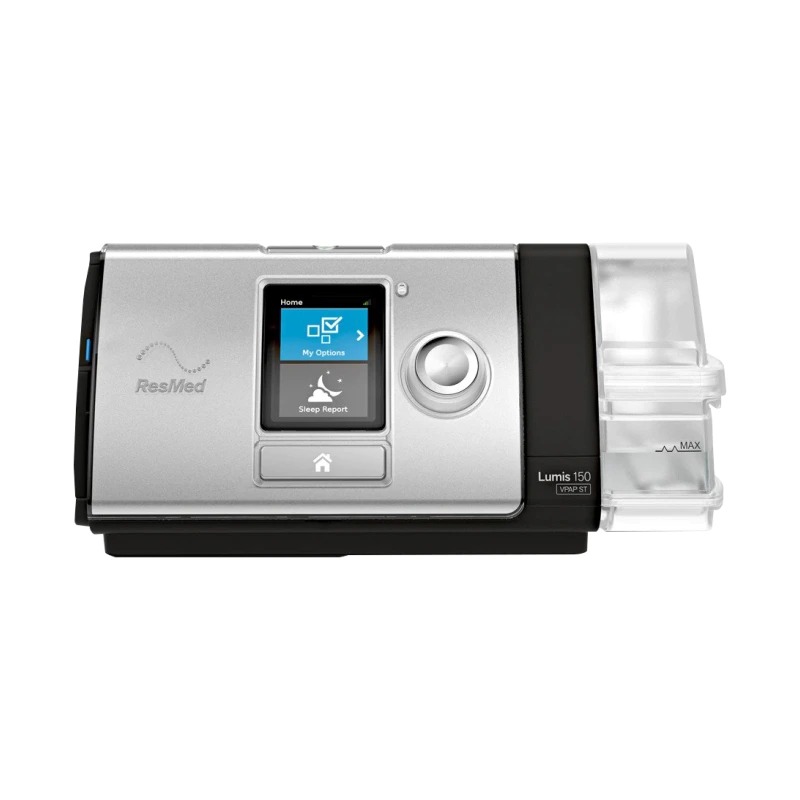
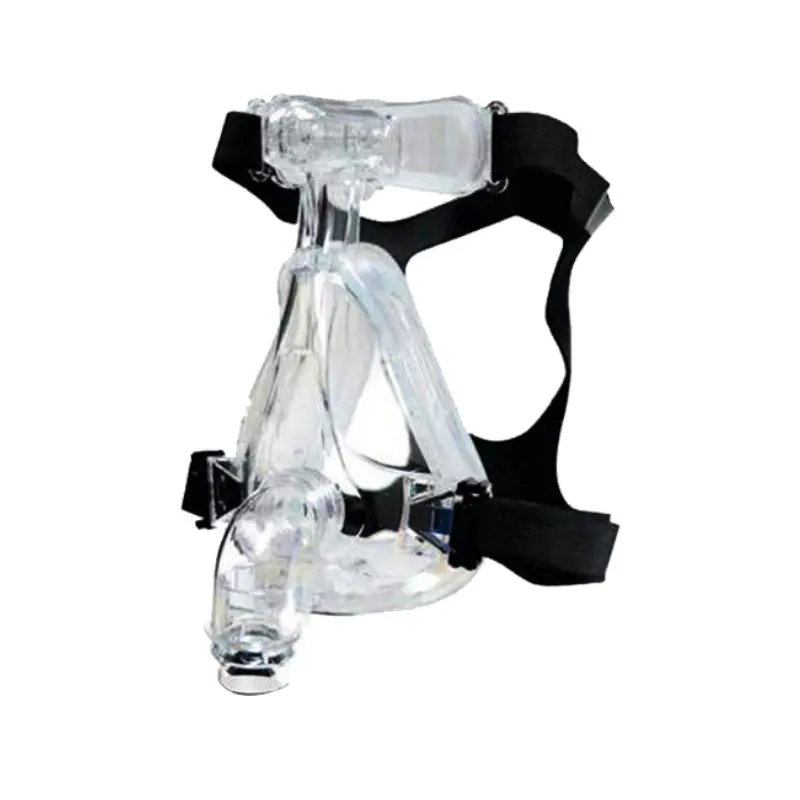
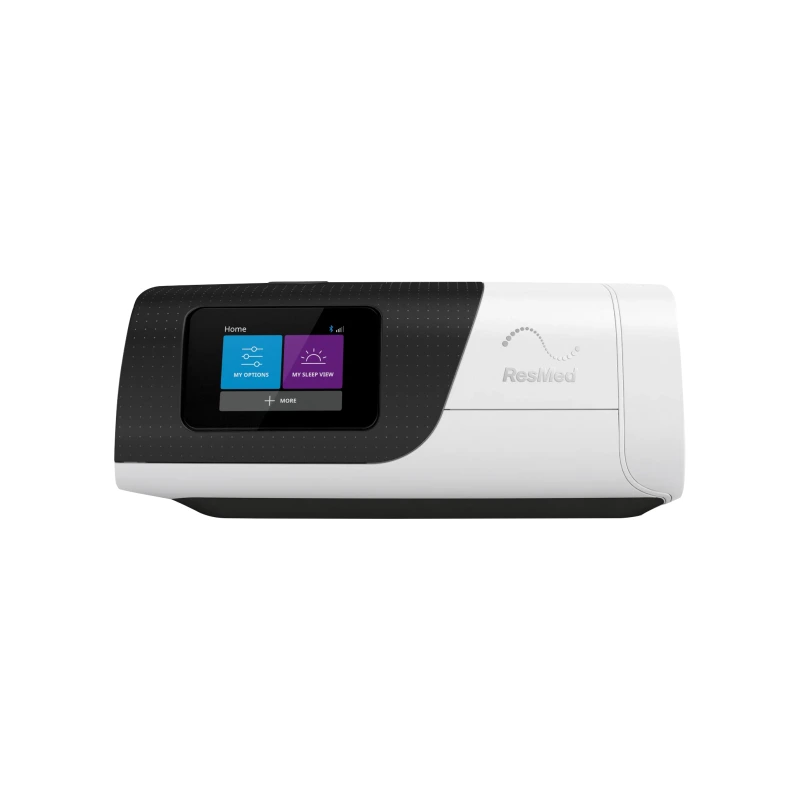
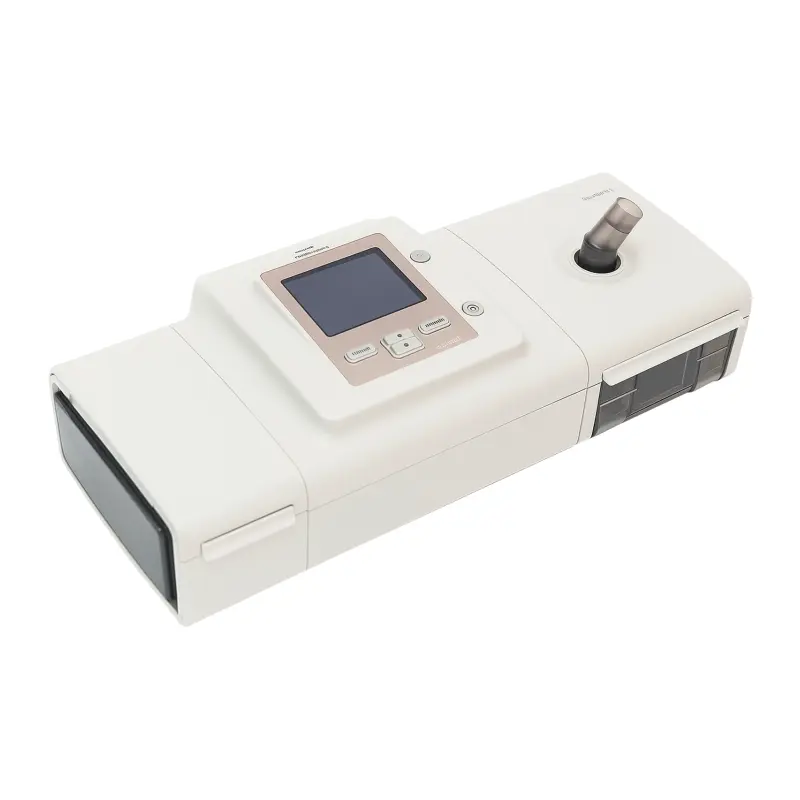
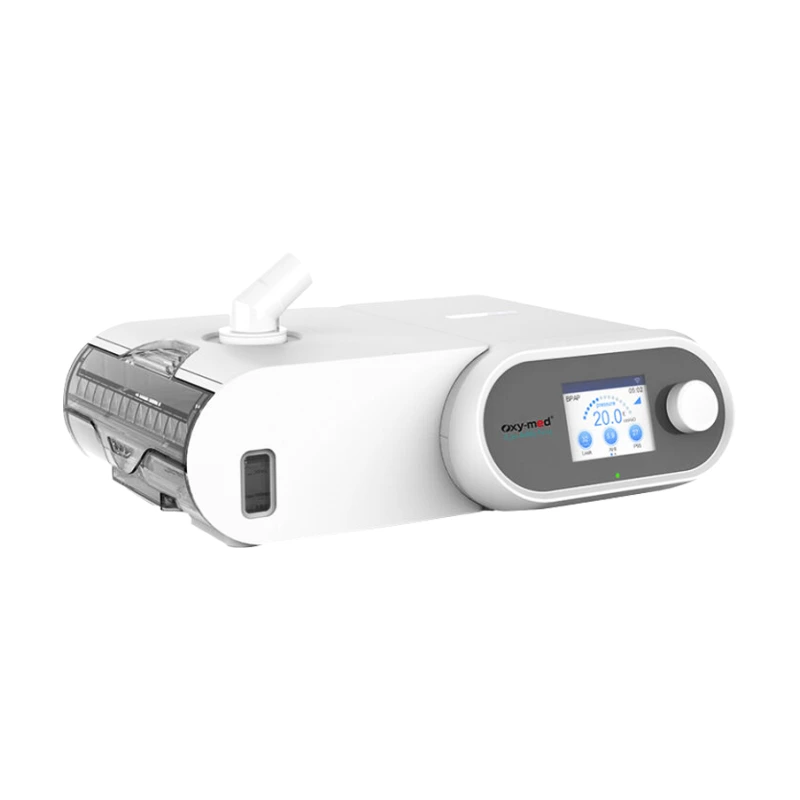
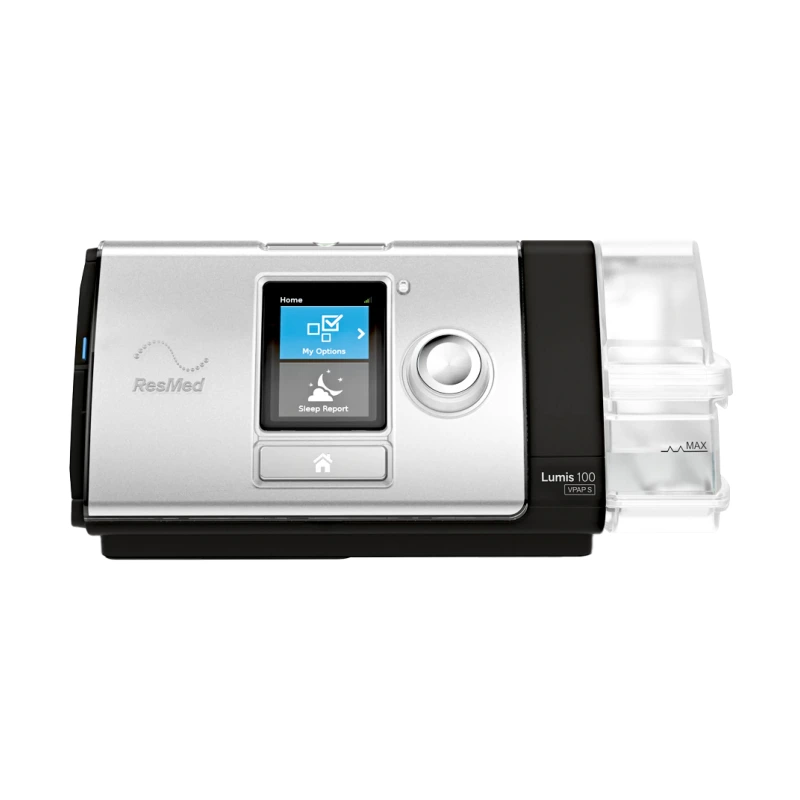
Description Key Features Modes: Spontaneous (S): Triggers breaths based on patient effort. Timed (T): Delivers breaths at a preset rate. Spontaneous/Timed (ST): Combines spontaneous and timed modes. Pressure Range: IPAP: 4–25 cm H₂O. EPAP: 4–20 cm H₂O. Backup Rate: 5–30 breaths per minute (adjustable). Rise Time: Adjustable inspiratory rise time for patient comfort. Alarms: Apnea, high/low pressure, low minute volume, power failure. LCD Display: Monitors parameters like IPAP, EPAP, leak rate, and tidal volume. Built-in Humidifier: Optional heated humidification to prevent dryness. Data Logging: Stores therapy data for review. Technical Specifications Parameter Details Dimensions ~30 x 25 x 15 cm (compact for bedside use) Weight ~4–5 kg (portable with carrying handle) Power Supply 220–240V AC with battery backup (optional external battery) Applications COPD: Manages chronic obstructive pulmonary disease exacerbations. Obesity Hypoventilation Syndrome (OHS): Supports patients with compromised breathing. Neuromuscular Disorders: ALS, muscular dystrophy, or spinal cord injuries. Central Sleep Apnea: Provides backup breaths during apneas. Post-Surgical Recovery: Assists ventilation after anesthesia. Safety Features Apnea Alarm: Triggers if no breath is detected within a set time. Leak Compensation: Adjusts pressure to maintain therapy efficacy. Auto On/Off: Starts/stops with patient’s breathing effort. Battery Backup: Ensures operation during power outages. Setup and Operation Connect Tubing: Attach to the machine and mask. Set Parameters: Adjust IPAP, EPAP, backup rate, and rise time. Start Therapy: Monitor patient compliance and alarm triggers. Data Review: Download stored data via USB/SD card (if available). Maintenance Daily: Wipe surfaces and clean filters. Weekly: Wash tubing and humidifier chamber. Monthly: Replace air filters and check seals. Key Takeaways The Oxymed BiPAP ST is a practical choice for patients needing non-invasive ventilation with backup respiratory support, particularly in resource-limited settings. Its affordability and essential ST-mode functionality make it suitable for: Chronic respiratory failure management. Home-based care for neuromuscular disorders. Always consult a pulmonologist or sleep specialist to configure pressure settings and backup rates.